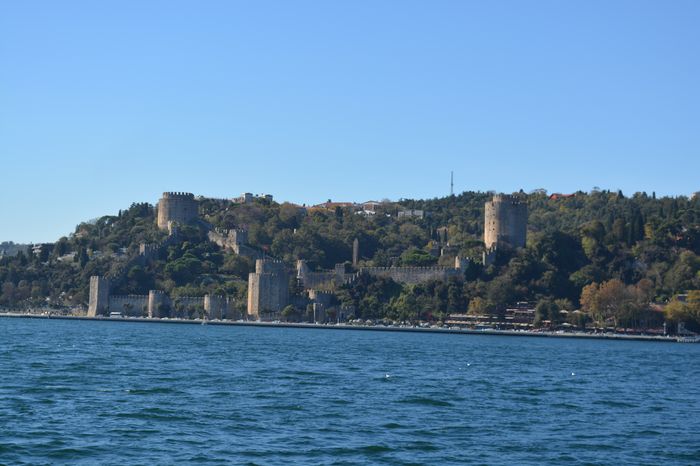

Constantinople’s harbours were not only centers of trade and naval activity but were also surrounded by important towers and landmarks. These structures served practical purposes, as well as ceremonial and symbolic functions, reflecting the city’s strategic and cultural importance.
The Tower of Bukanon
Near the Harbour of Sophia stood a tower called the Bukanon, also known as the Trumpet Tower. According to historical sources, the tower was so named for two reasons. First, trumpets were stored there, and second, the tower itself was hollow and produced a trumpet-like sound when the waves struck it Walking Tour Istanbul.
The Anonymus explains that whenever the Imperial fleet sailed from the city, the ships would gather in front of this tower and exchange musical salutes. While this story may be somewhat legendary, it likely reflects the practical role of the tower: it was a station from which the movements of ships were directed using trumpet signals.
The tower’s location is described as being between the Church of Saints Sergius and Bacchus and the Harbour of Sophia. If this order reflects the actual geography, then the Bukanon stood on the eastern side of the harbour, guiding ships and serving as a landmark for sailors.
The Harbour of Kontoscalion
Another important harbour on the Marmara Sea side of the city was the Harbour of Kontoscalion. The earliest recorded mention of this harbour comes from the eleventh century, in the Anonymus. However, its greatest significance came after 1261, during the reign of Emperor Michael Palaeologus.
Michael selected the Kontoscalion to be the principal dockyard and station of the Imperial navy. The harbour’s location made it ideal for protecting the fleet from surprise attacks while providing a strong base from which to launch naval operations. It became the main hub for military and naval activities in Constantinople, playing a key role in the defense of the city The Strategic Harbour of Kontoscalion.
Strategic and Ceremonial Roles
Both the Tower of Bukanon and the Harbour of Kontoscalion illustrate how the Byzantines combined practical and ceremonial functions in their urban planning. The Bukanon was not just a landmark but also a communication post for naval movements, while the Kontoscalion was both a commercial harbour and a strategic military base. Together, they reflect the importance of Constantinople’s coastal infrastructure in trade, defense, and imperial display.
The harbours and towers of Constantinople, including the Harbour of Sophia, the Bukanon Tower, and the Harbour of Kontoscalion, played vital roles in the city’s life. They guided ships, protected fleets, and supported trade, while also serving symbolic and ceremonial purposes. These structures highlight the advanced planning and strategic thinking of the Byzantine Empire, showing how the city’s leaders combined military, commercial, and civic needs in their urban design.